
How to Search for an Itasca County Warrant
There is no standalone Itasca County warrant database to query. Court records live in the state system, so a warrant search here runs through case files rather than a sheriff's roster. Each channel below covers part of the picture, so work them in order.
- Open the MCRO public portal and choose the case search.
- Search by name with an optional date of birth, or by case and citation number.
- Read Case Details and the Register of Actions for a warrant or failure-to-appear event.
- Call Court Administration at 218-327-2870 if the case is not online or the event is unclear.
- Call the sheriff at 218-326-3477 for custody and service routing, or file a records request.
Why a Pending Itasca Criminal Case May Not Appear
The state's case system cannot find every pending criminal case by defendant name; that limit is published, not rumor. A case can also be restricted. When a result screen says the name is not available online, the next stop is a courthouse terminal or Itasca County Court Administration. Search warrants sit outside the public case system entirely, and filings can be delayed or sealed while an investigation continues. So a blank result is not proof that no case exists.
Itasca County Warrant Search Fields
MCRO offers several ways in. The person search is the usual start for an Itasca County warrant check, and the field set comes from the court's own guide. One catch: wildcards and the sounds-like option cannot be combined.
| Field Label | Type | Required | Notes |
|---|---|---|---|
| Person or Business | Selector | Yes | Choose Person for a name search |
| Last Name | Text | Yes | Working field for a person search |
| First Name | Text | Yes | Middle name is optional |
| Date of Birth | Date | No | Narrows common-name results |
| Wildcard or Sounds Like | Checkbox | No | Asterisk needs two characters first; not combined |
| Date Filed | Exact or Range | No | A range takes a start and end date |
| Case Status | Dropdown | No | Limits results to a status group |
| Court Location | Statewide or County | No | Select Itasca County to narrow the list |
| Case or Citation Number | Text | Yes on that tab | Spaces and dashes may be left out |
The Four Itasca County Case Search Tabs
The public system has four tabs, and only one answers a warrant question. Case search returns case details and the event list. Document search needs a case number first. Hearing search works from a name, an attorney, a judicial officer, or a case number. Judgment search is a debtor search for civil judgments. Treat the other three as supporting tools rather than Itasca County warrant checks. If you already hold a citation, the case number feeds every tab, so preserve it from the ticket or the court notice. The state's case record overview describes the four tabs and their limits.
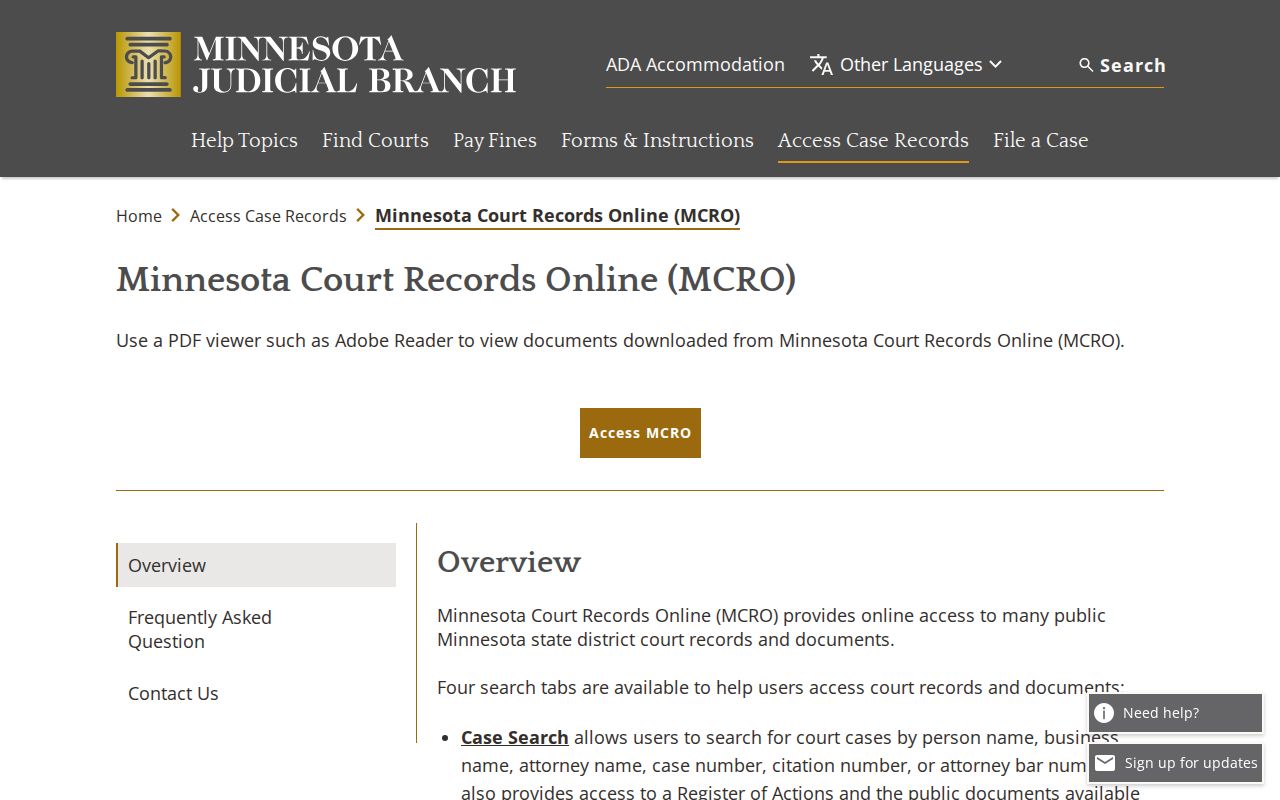
Only the case search returns the dated events a warrant check depends on.
What an Itasca County Warrant Search Returns
A matched result leads to a case, not a warrant card. The summary names the parties and the case category. The event list carries the detail that matters in an Itasca County warrant search: read the newest events first, then work backward to see whether the court recalled, quashed, or served anything.
| Case number | Uses the county prefix, for example 31-CR-25-0000 |
|---|---|
| Case category and status | Criminal, traffic, or petty, with the current case status |
| Party role | Defendant, plaintiff, or another role in the case |
| Charge or citation | The offense or ordinance listed in the case |
| Warrant or FTA event | The dated event showing a warrant or failure-to-appear action |
| Financial event | Fines, balances, and collections entries |
| Access restriction | A note that part of the file is not public |
Name Matches and Sound-Alike Searches in Itasca County
An exact name search misses spelling variants, hyphenated names, and maiden names. The wildcard covers endings; place an asterisk after at least two characters. The sounds-like option broadens the match instead. It is a different tool, not a combined filter. Add a date of birth when a common name returns a long list. If the system offers a case status filter, use it to separate open Itasca County matters from closed ones. A short list is easier to read than a broad one. Once you have a case number, the court can confirm the right case.
Where Itasca County Warrants Are Checked
Three offices hold different pieces of an Itasca County warrant check. Court Administration keeps the case record and can explain what the court ordered. The Sheriff's Office handles custody, service, and routing questions. The Records Division answers requests for existing law-enforcement data under the state data practices law. City police are a fourth stop, but only to identify a citation or report. A Grand Rapids, Keewatin, Nashwauk, Deer River, or Coleraine officer can tell you which agency issued a ticket. None of those departments publishes a city warrant list, and the court remains the confirmation point.
Warrant flow: District Court case, then sheriff or city officer service, then a recorded event back in the same case file.
Requests for Existing Itasca County Records
A public data request reaches agency records that never appear in a court portal. The Itasca County form asks for the type of information, the subject name, a date of birth or address, the event date, and any context. A requester does not have to explain why public data is wanted, though a precise date range speeds the answer. Inspecting public data in person is free. Copies may carry a fee. Staff classify data before release, so an Itasca County request can come back partly or fully denied with the statute cited. The county request portal accepts online submissions, and the records request form lists the fields and the return channels.
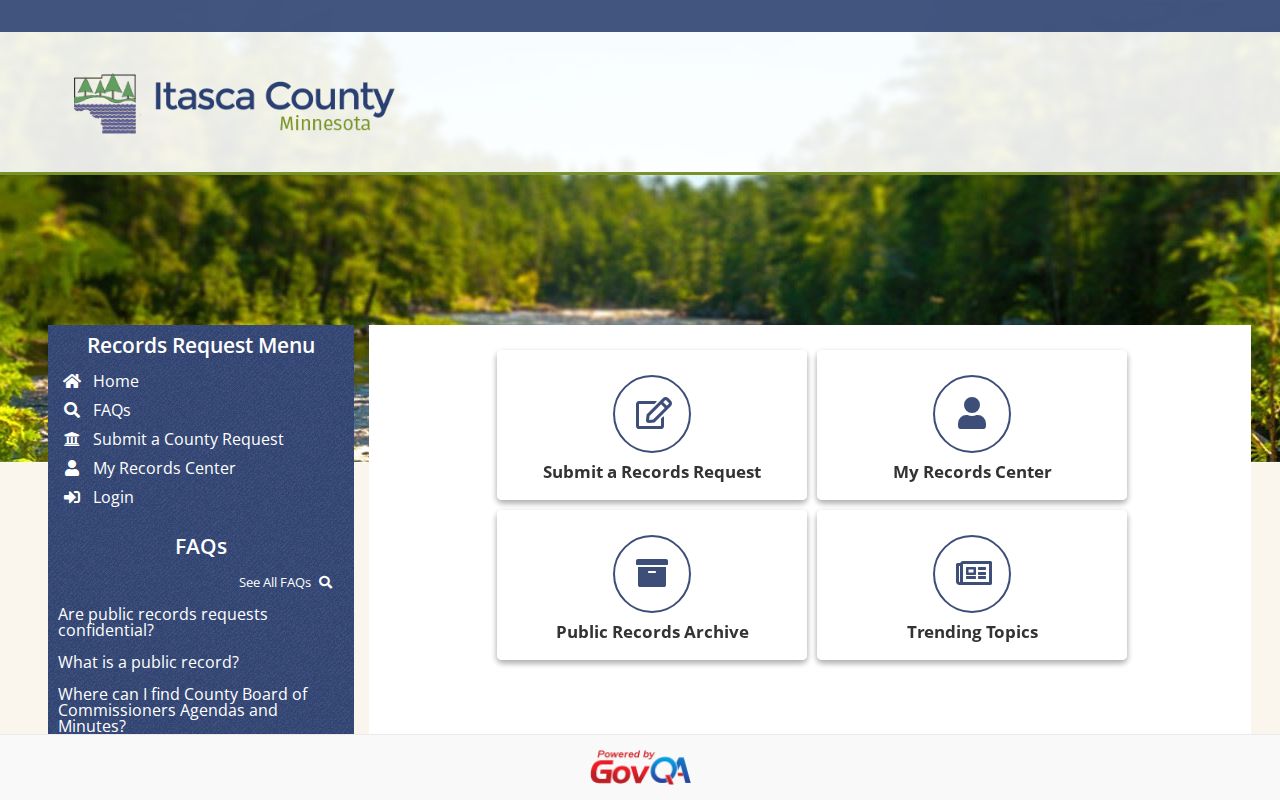
Prefer paper, fax, or email? Itasca County keeps those routes open for records requests that resist a portal form.
Access and Restricted Warrants
Minnesota law sets the limits of any Itasca County warrant search. The arrest data itself is mostly public. The index behind it gets different treatment, and court rules govern what a court can post online. Sealed files, juvenile records, and active investigation material stay out of view.
Key Rules:
Minnesota Statutes 13.82 - arrest data is public in part, while the arrest-warrant index stays confidential until custody, service, or appearance.
Minnesota Statutes 260B.171 - juvenile delinquency records are not open to direct public electronic access.
Minnesota Statutes Chapter 13 - the Data Practices Act sets the request process and the reasons an agency can withhold data.
The BCA Warrant File Is Not a Public Search
Every county, Itasca County included, must feed its warrant records into the state criminal justice network under Minnesota law. That file exists so officers on the street can check it in seconds. It stays closed to the public, though. For a warrant lookup, the open route is still case records at the courthouse, plus the county records request process. The statute requiring the warrant file spells out the reporting duty and explains why police see entries a visitor cannot.
Note: The state data request office handles records it holds, but it cannot confirm a live Itasca County warrant, so start with the court.