
Bench Warrants in Itasca County
A bench warrant is a court's own muscle, used when someone ignores what the judge required. Itasca County's failure-to-appear notice lists the usual triggers: a skipped court date, a payable matter left unpaid or unanswered, or a broken release condition or court order. Minnesota has no capias label for these. Here the names are bench warrant, warrant after failure to appear, and sign-and-release warrant. The wording on the paper matters far less than the case sitting behind it.
Ask Whether the Itasca Warrant Is Sign-and-Release
Minnesota built a softer answer to missed court dates. Under Minnesota Statutes 629.415, a qualifying sign-and-release warrant carries no arrest authority and no bail. An Itasca County officer who stops the person explains the missed date, hands over a written new date with the file and warrant number, and lets them go. The warrant is then inactivated. The court record gets updated too. A prosecutor can still ask for bail and conditions instead, so the category question comes first. Two Itasca County warrants that look identical on a case screen can lead to very different afternoons. The sign-and-release statute spells out what qualifies for the no-arrest version.
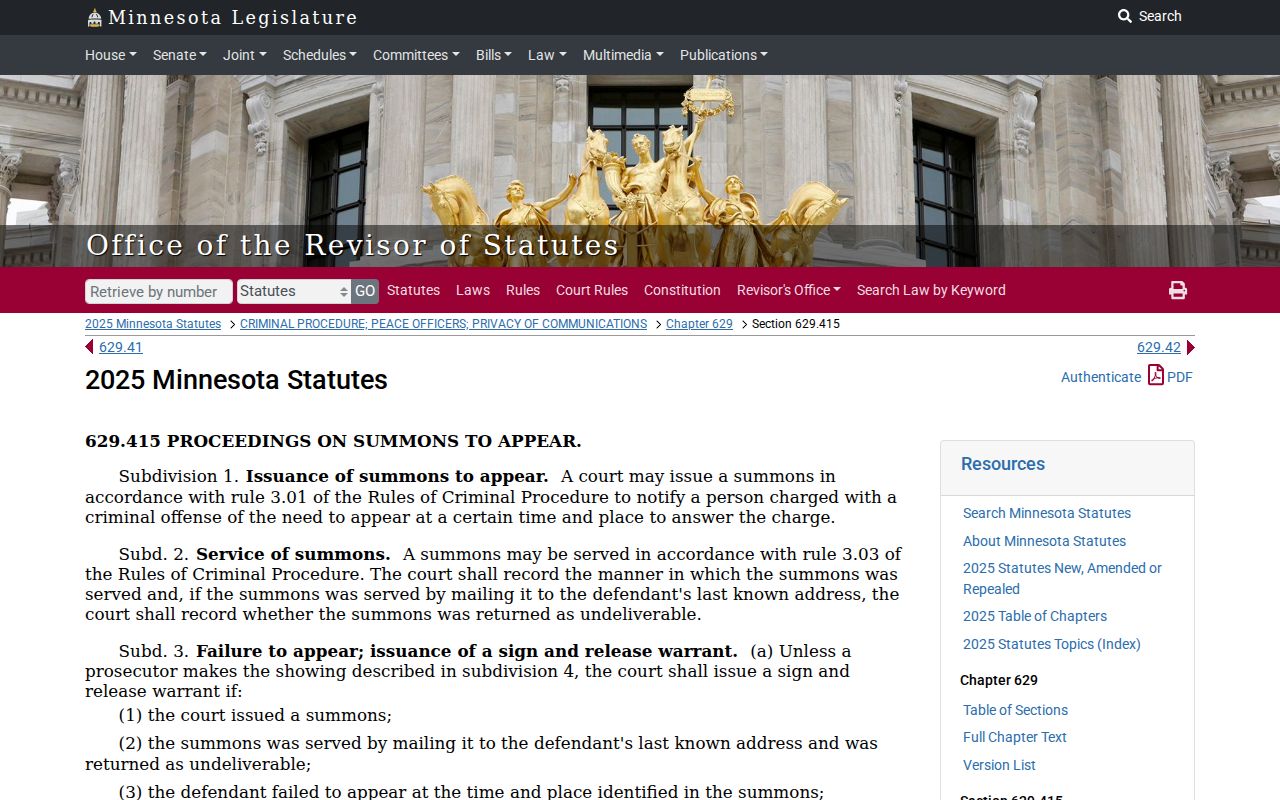
Reading the statute before a call makes the question to Court Administration much sharper.
How an Itasca County Bench Warrant Is Issued
The judge signs it out of the existing case, not from any new charge. A failure to appear on a summons can produce one. So can a missed payment or a skipped condition. Once issued, an Itasca County warrant joins the case record and enters the state law enforcement network for officers on the street. It stays active until service is recorded or the court recalls it. Nothing lapses on its own, and paying a fine to a vendor does not erase the warrant.
The Court's Rule 8 Failure-to-Appear Paperwork
The state publishes a model warrant for use after a missed appearance. It shows the county and judicial district, the court file number, the failed appearance, the original complaint or citation, the offense, and the judge's signature ordering that the person be brought before the court. Nowhere does the form settle whether the warrant authorizes an arrest. That answer lives in the case record and with the court itself. The failure-to-appear warrant form sits with the state criminal rules for anyone who wants to read the document itself.
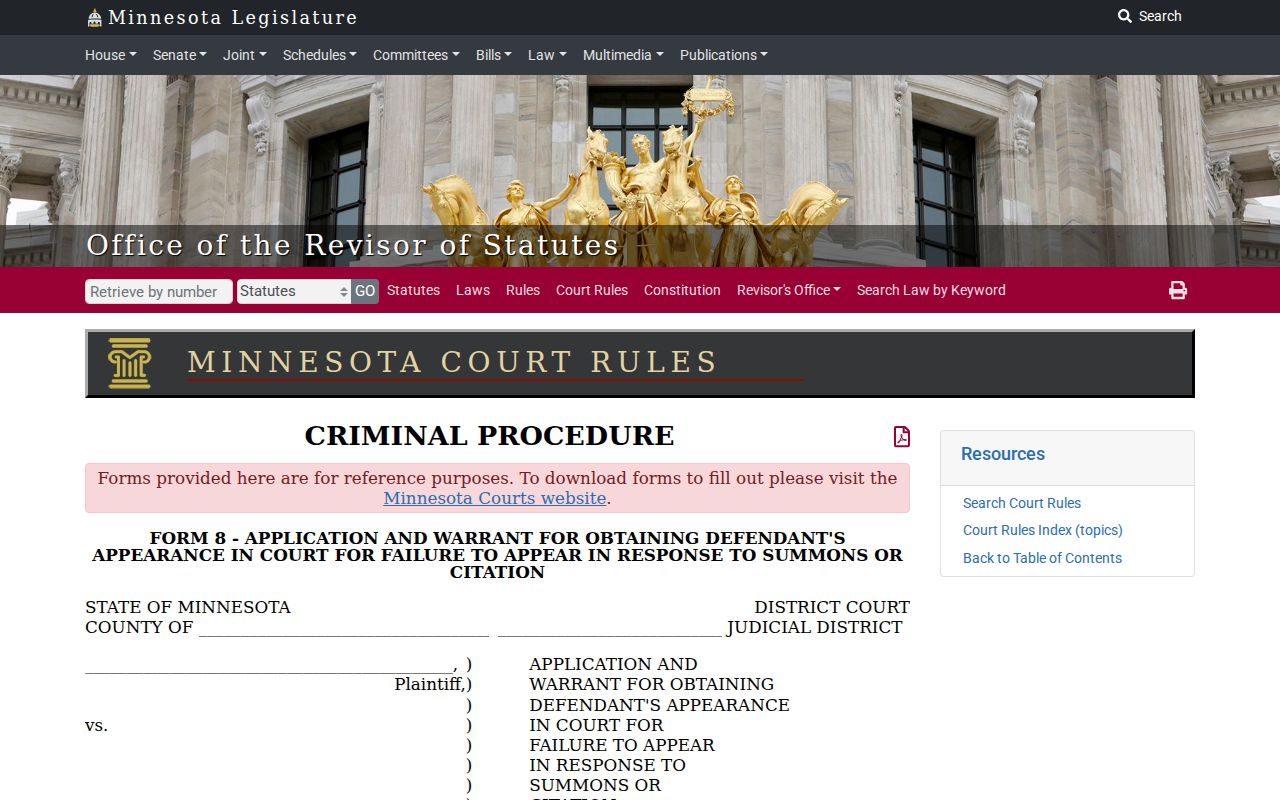
The blank form's field names match what an Itasca County case file shows line by line.
Bench Warrant vs Arrest Warrant
These two papers come from different rooms. An arrest warrant opens a criminal case on a showing of probable cause. A bench warrant in Itasca County answers trouble inside a case already filed. That difference tells you which office can fix it.
| Feature | Bench Warrant | Arrest Warrant |
|---|---|---|
| Trigger | A missed date, unpaid obligation, or order violation | Probable cause of an offense |
| Who issues it | The judge handling the case | A judge on a complaint |
| Underlying case | A case the person already had | A new or newly charged matter |
| How it clears | Appear, pay, or seek recall | Surrender, bond, or court action |
Itasca County's Failure-to-Appear Consequences
The county's notice lays out a chain, not one punishment. A missed appearance or unpaid matter can be treated as a guilty plea for a petty misdemeanor, certified to the driving record with a license consequence, turned into a bench warrant, or sent to collections. Collections brings its own bite: fees, a judgment or lien, wage or bank levy, vendor offset, and refund seizure. Minnesota law adds a separate traffic failure-to-appear path with notice and a suspension window. The county failure-to-appear notice spells out these consequences in plain terms.
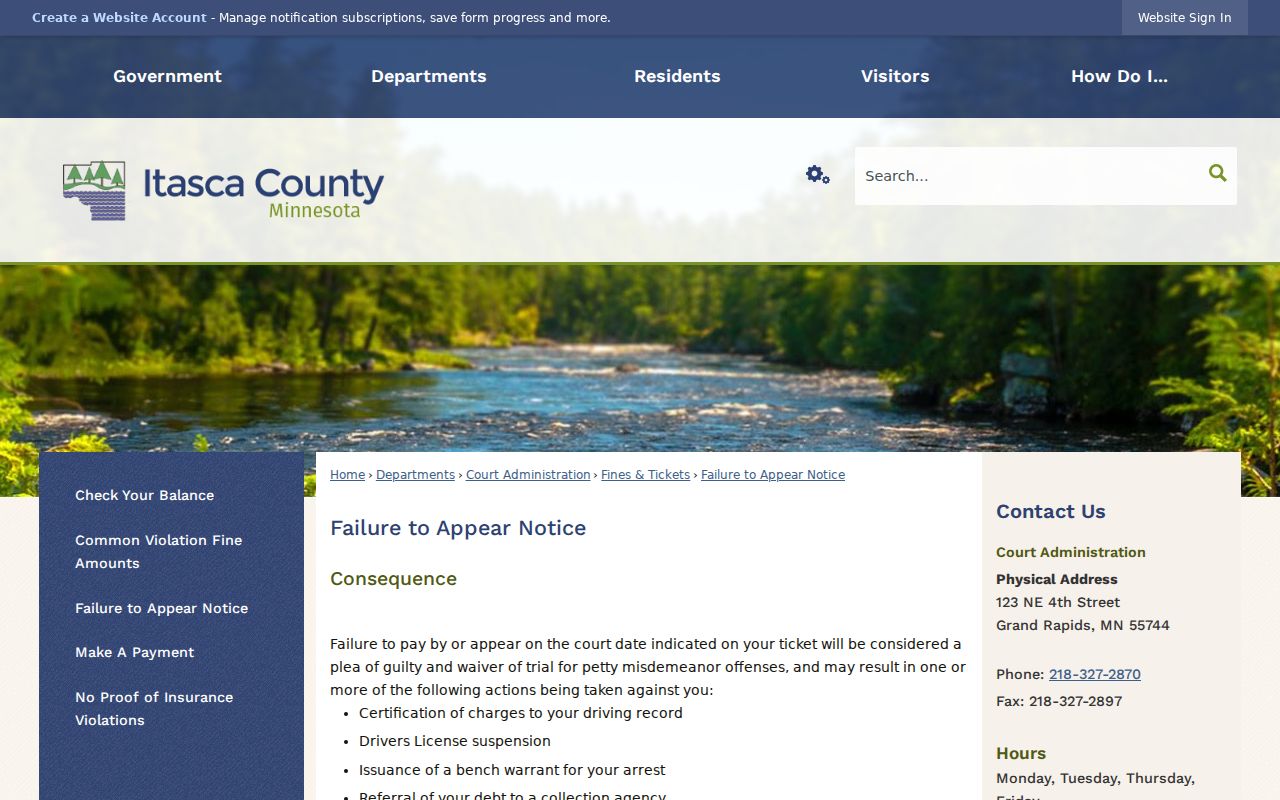
Reading it early is cheaper than meeting the collections stage later.
How to Resolve an Itasca County Bench Warrant
Fixing it runs through the court that issued it. Confirm the case first. Then ask what the judge wants. A payment plan, a new date, a bond posting, and a motion to recall are different remedies in Itasca County, and only the issuing court can pick the one that fits.
- Confirm the case number and read the register of actions.
- Call Court Administration at 218-327-2870 and ask whether the warrant is sign-and-release.
- Ask the court for the next required action: date, payment plan, bond, or appearance.
- Consult an attorney about a motion to recall or a controlled appearance if arrest is authorized.
- Complete the underlying obligation and confirm the record updated.
Caution: A bench warrant does not expire. Ignoring one can bring a traffic-stop arrest, a license consequence, and collections costs that grow while it sits.
No Published Itasca Recall Form or Warrant Fee
Itasca County publishes no motion-to-recall form and no warrant-recall filing fee, and the courthouse describes no walk-in counter for that purpose. The absence reshapes the plan rather than blocking it. A reader asks Court Administration which action the judge requires, and an attorney files whatever the court accepts. Copy fees are a separate matter. Uncertified court instruments and uncertified printouts cost nothing, certified copies carry a charge, and scanning or large reports carry their own rates. Ask before ordering paperwork that a phone call could settle.
No Separate Itasca City Bench-Warrant Clerk
Grand Rapids, Keewatin, Nashwauk, Deer River, and Coleraine each have a police department, and none runs a city warrant court. Local ordinance cases move through the District Court system, so a city citation that goes to warrant lands in the same court files as everything else in Itasca County. City police stay useful for one thing: naming the agency that wrote the citation. They cannot recall a court warrant, and a call to the station to clear one just burns a trip.
Which Itasca County Court Issued It
Bench warrants in this area come from warrant search records tied to the case, and the case sits with Itasca County District Court, part of the Ninth Judicial District. That is where to call. Court Administration keeps the file and can tell you exactly what the judge ordered. The sheriff serves the paperwork. He does not control the warrant. When the case number is unclear, the case system usually turns it up. Once you have it, take every question about the bench warrant to the courthouse, not to a police lobby.
Note: County court record fees differ by format, with uncertified instruments free and certified copies carrying a set charge, so ask before ordering paperwork.