
Arrest Warrants in Itasca County
An arrest warrant is a judge's written command. It tells an officer to take a named person into custody and bring that person before the court. Minnesota Rule 3.01 sets the standard: a complaint, an affidavit, or sworn testimony must show probable cause that an offense happened and that this particular person committed it. The same rule leans toward a summons instead when the person is likely to respond. Itasca County has a single trial court, the District Court in the Ninth Judicial District, and its judges issue every criminal warrant in the county. A city police department can write the report that starts the case. The county attorney files the complaint. Neither of them signs the warrant. That choice belongs to the judge alone.
Itasca Arrest Warrants and the Rule 3 Record
Warrants never appear out of thin air. Someone drafts a charging document first. A judge then reads it and decides what follows, which is why one Itasca County charge ends in an arrest warrant and a nearly identical one ends in a summons.
- A complaint and its supporting facts are prepared for a judge.
- The judge reviews the probable-cause showing under Rule 3.
- The judge signs a warrant or orders a summons.
- The court enters the case and the warrant in the state system.
- An authorized officer executes it and brings the person to court.
That call belongs to a judge in Itasca County, so no police department can promise what a filing will produce.
What an Itasca County Arrest Warrant Contains
Rule 3.02 lists what the signed order must contain. A copy from an Itasca County case file shows those same categories.
| Court File Number | The case identifier, which carries the Itasca County prefix 31 in the local search path. |
|---|---|
| Defendant Identifier | The name or description that identifies the person to be arrested. |
| Offense | The charge, its statute, and its classification. |
| Probable-Cause Basis | The complaint or affidavit the judge relied on. |
| Bail and Conditions | Any amount or release terms set when the order was signed. |
| Issuing Authority | The judge and the date of the order. |
| Execution Direction | The instruction to bring the person promptly before a judge. |
| Status | Active, served, recalled, or quashed, as the case record shows it. |
The 36-Hour Rule and Itasca Appearances
An arrest is a step, not the finish line. Minnesota Rule 4 governs what happens after an officer takes someone into custody, and Rule 3.02 builds a deadline right into the warrant. If court is not in session, the order directs that the person be brought before a judge within 36 hours or as soon as one is available. That clock matters to a family member picturing the next day. A judge handles release and its conditions. Itasca County publishes no bond schedule, and there is no walk-in surrender procedure either. Case questions go to Court Administration. Custody questions go to the jail.
Note: The 36-hour direction is a court deadline for the first appearance, not a promise about how quickly release follows.
How Itasca County Arrest Warrants Are Served
Minnesota Rule 3.03 lets an authorized officer execute a warrant. In this county the work is shared. Sheriff's deputies handle county cases, court security, and transportation of people held on warrants and commitments. City police in Grand Rapids, Nashwauk, Keewatin, Deer River, and Coleraine may also serve or encounter a warrant within their own authority. No constable or marshal system operates here. The sheriff posts no public list of warrants awaiting service. A person stopped on an open warrant is taken into custody and booked.
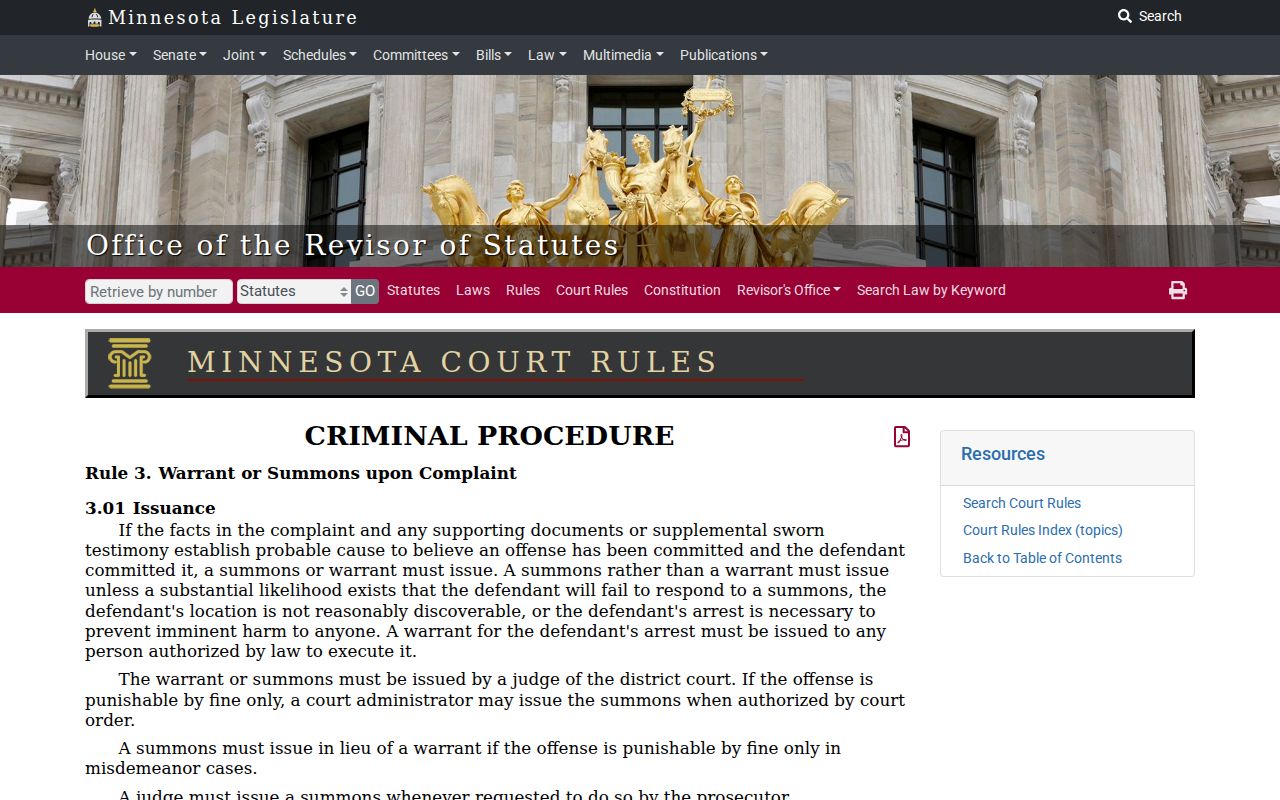
Every Itasca County arrest warrant traces back to that same rule, the one a judge relies on in each case.
Itasca County Sheriff's Office
108 NE 5th Street, Grand Rapids, MN 55744
218-326-3477
Jail and custody questions: 218-327-3477
Why Itasca Search Warrants Stay Out of MCRO
Arrest warrants and search warrants do different jobs. An arrest warrant authorizes taking a person into custody. A search warrant lets officers search a described place or vehicle and seize described evidence. The paperwork follows different routes too. Minnesota court guidance says search-warrant applications are not available in Minnesota Case Records Online, and Rule 33.04 lets a court delay filing or seal the paperwork while an investigation runs. For Itasca County search warrants, the limited public route runs through the courthouse, not the online portal.
Arrest Warrant vs Summons vs Bench Warrant
On a case screen, the three instruments can look nearly identical. In practice they behave very differently. A bench warrant in Itasca County grows out of a case the person already had, while a summons and an arrest warrant both start a new matter.
| Instrument | How It Starts | What It Authorizes |
|---|---|---|
| Summons | A complaint filed with probable cause | A required appearance, no custody |
| Arrest warrant | A complaint plus a reason a summons will not work | Taking the person into custody |
| Bench warrant | A missed date or an order violation | Enforcement inside an existing case |
No Itasca Arrest Warrant Bond Schedule
There is no bond schedule to consult here. Minnesota court resources say bail can be handled at the jail or in criminal court, and a judge sets the amount or the release terms case by case. Itasca County publishes nothing by offense level and lists no bond-window hours. The state does offer one warning worth heeding. Only agents on the court branch's approved bail-bond list may post a surety bond. Check that list before signing anything.
| Release Type | How It Works | What to Ask |
|---|---|---|
| Cash bond | Money deposited under court or jail procedure | Where it is paid and how refunds work |
| Surety bond | An approved agent posts the bond | Whether the agent is on the state list |
| Personal recognizance | Release on a promise to appear | What conditions still apply |
| No-bond hold | The person stays in custody | When a judge will review it next |
The Itasca Arrest-Warrant Index and Public Data
Minnesota's Government Data Practices Act is Chapter 13. Section 13.82 makes many arrest-data elements public, including the legal basis for an arrest and custody information. The same section carves out one exception: the arrest-warrant index. That index stays confidential until the defendant is in custody, is served, or appears, unless the agency decides disclosure serves a public purpose. This timing rule is why no complete Itasca County list can be promised. A records request works best when it names the requester's own case and a date range.
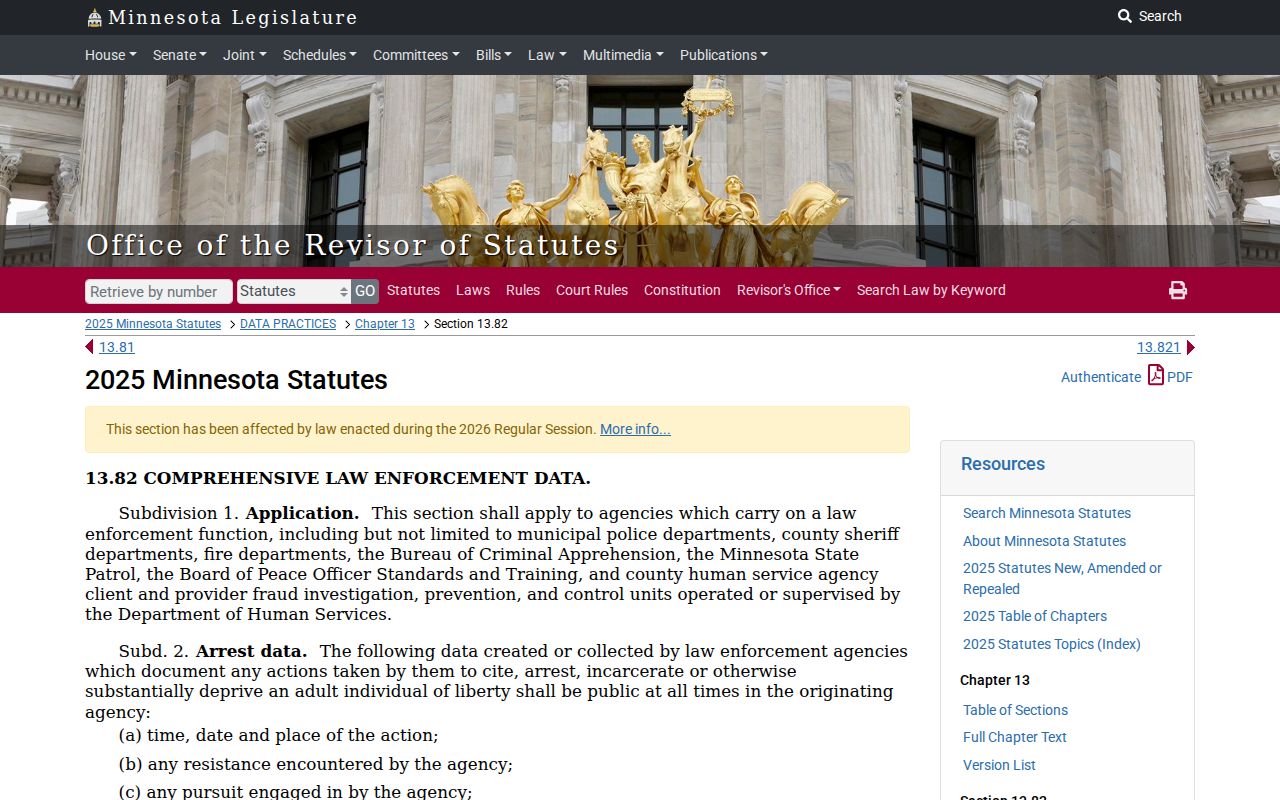
That timing rule is why an Itasca County warrant can exist without showing up on any public page.
What to Do If There's a Warrant for You
An arrest warrant is a court problem with a court answer. Preparation makes the answer go better. Confirm the case first, then work with a lawyer on how to appear. Itasca County publishes no walk-in surrender counter, so nobody should drive to the jail or courthouse on a guess about where to report.
- Confirm the case number through the court record or Court Administration.
- Ask whether the warrant authorizes an arrest and whether bail is set.
- Speak with an attorney about a controlled appearance or a motion to recall.
- Ask the court or jail where and when to report before traveling.
- Keep every receipt and new date, then confirm the case record updated.
Important: Do not wait on an arrest warrant or act on an unverified call. Confirm the case through the courthouse, then follow the plan an attorney helps you set.