
Active Warrants in Itasca County
No county office publishes a running list of active warrants. Itasca County posts nothing you could call an outstanding-warrant roster, and the Sheriff's Office resources page carries no link to one. Warrants show up as events inside District Court cases instead, so the case record is where the public actually sees them. An active warrant simply means a warrant that a judge has issued and nobody has yet served, recalled, or quashed. That label is a status in a system. It is not a measure of risk, and it tells you nothing about a charge. When a name is in question, the issuing court holds the real answer. The sheriff resources page shows what the office does publish, including its route for data requests. It also makes clear why the warrant question keeps going back to the court.
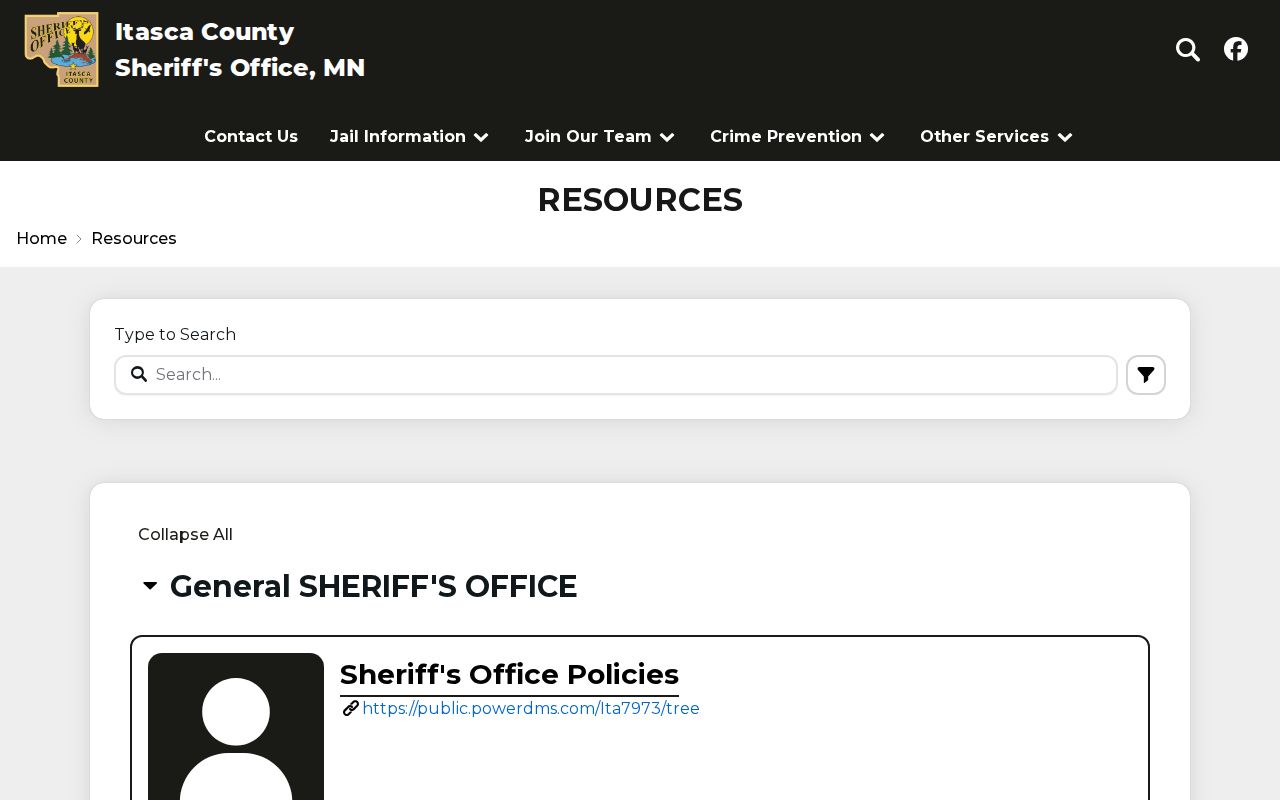
That missing link sends every Itasca County warrant question back to the court record, where the answer actually lives.
Active Warrant, Custody, and Most Wanted Compared
People mix up three different questions. A custody roster names who sits in the Itasca County jail right now. An active warrant is a court status that may have nothing to do with custody yet. A most-wanted page would be a hand-picked public-safety subset, and Itasca County runs no such page at all.
| Check | What It Shows | Where It Lives |
|---|---|---|
| Active warrant | An unresolved court warrant event | The District Court case record |
| Custody roster | Who is booked in the county jail now | The sheriff's inmate search |
| Most wanted | A curated subset chosen by an agency | No Itasca list located |
| Warrant index | Law enforcement warrant data | The state network, not public |
The sheriff's custody search is built for booking information.
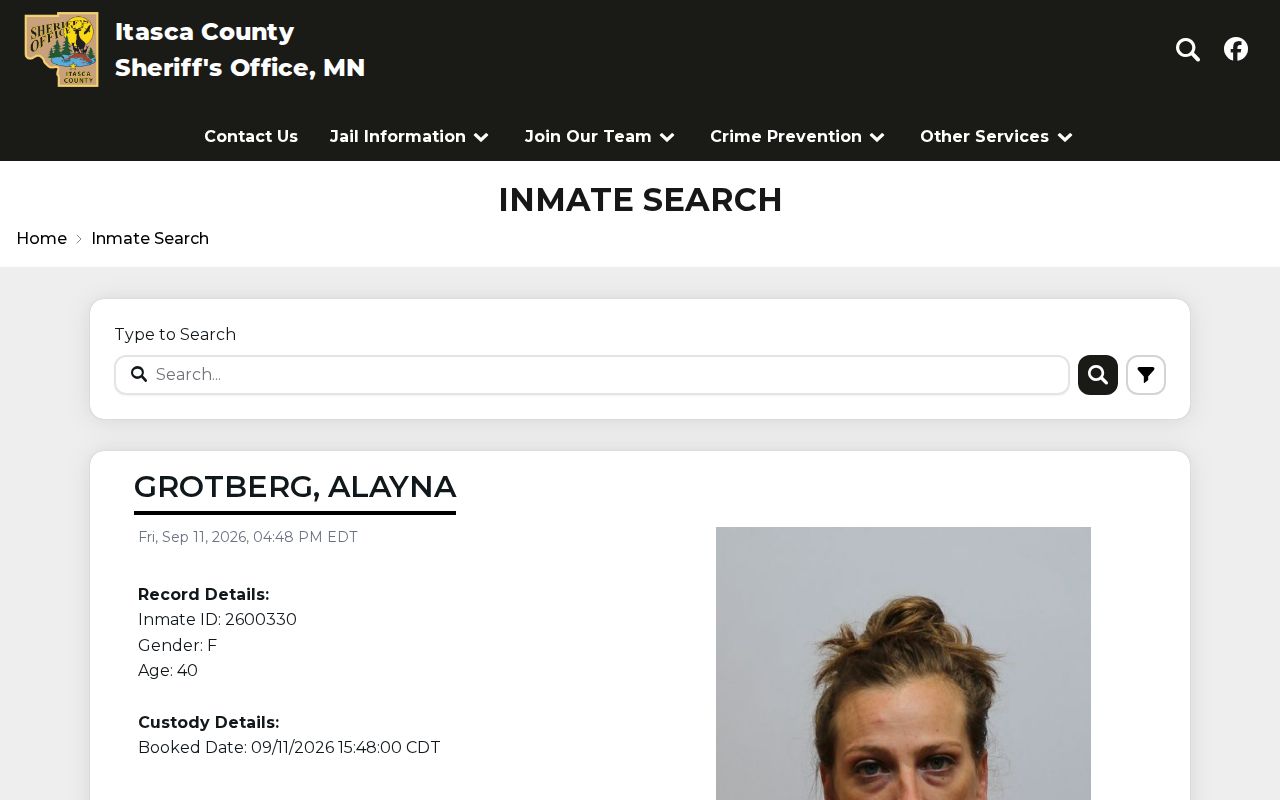
A booking card proves custody in Itasca County, and it says nothing about whether a warrant is still open in a separate case.
How the Itasca County Active Warrant List Works
No list exists, so the substitute is a case search plus a phone call. Itasca County Court Administration reads the register of actions and explains what the judge requires of you. The Sheriff's Office takes questions about service and custody.
Note: Court records lag real events, so a served or recalled warrant can still appear on a case screen, and a newly issued one may not be visible yet.
Why a Name Shows on One Check and Not Another
A red W can sit beside a party's name when no warrant is actually open. The court itself says that flag is not the same as an active warrant. A name search can also skip a case entirely, because pending matters, restricted records, and name variants all hide things. Warrants issued by another county or another state never appear in an Itasca County search at all. Search warrants stay out of the public case system too. Every one of these gaps ends the same way. Call the court that holds the case rather than staring at the same screen twice, and let the clerk read what the record really shows in Itasca County.
What an Active Warrant Shows
An active warrant shows up as a dated event inside a case. The Itasca County case information around it gives it meaning. Read the newest events first, then check the financial entries and any restriction note.
| Case number | County-prefixed, for example 31-CR-25-0000 |
|---|---|
| Warrant event | The issue date and the court action that created the warrant |
| Charge or citation | The offense tied to the case |
| Issuing court | Itasca County District Court, Ninth Judicial District |
| Bail or conditions | Release terms set by the judge, when the case shows them |
| Status | Active, served, recalled, or quashed, as the record reports it |
The Rule Behind a Missing Itasca Warrant Index
Minnesota law treats lots of arrest data as public while keeping the arrest-warrant index confidential. That protection lasts until the person named is in custody, served, or has appeared in court. An agency may release the index earlier if disclosure serves a public purpose. Nothing requires it, though, and that timing rule is why a careful question to an Itasca County office can draw a careful non-answer. The same statute drives the state requirement that county warrant information feed the law enforcement network. Officers use that network. The public cannot. The warrant network requirement is why an officer may see a record that stays closed to everyone else, and the statute spells out exactly which records it covers.
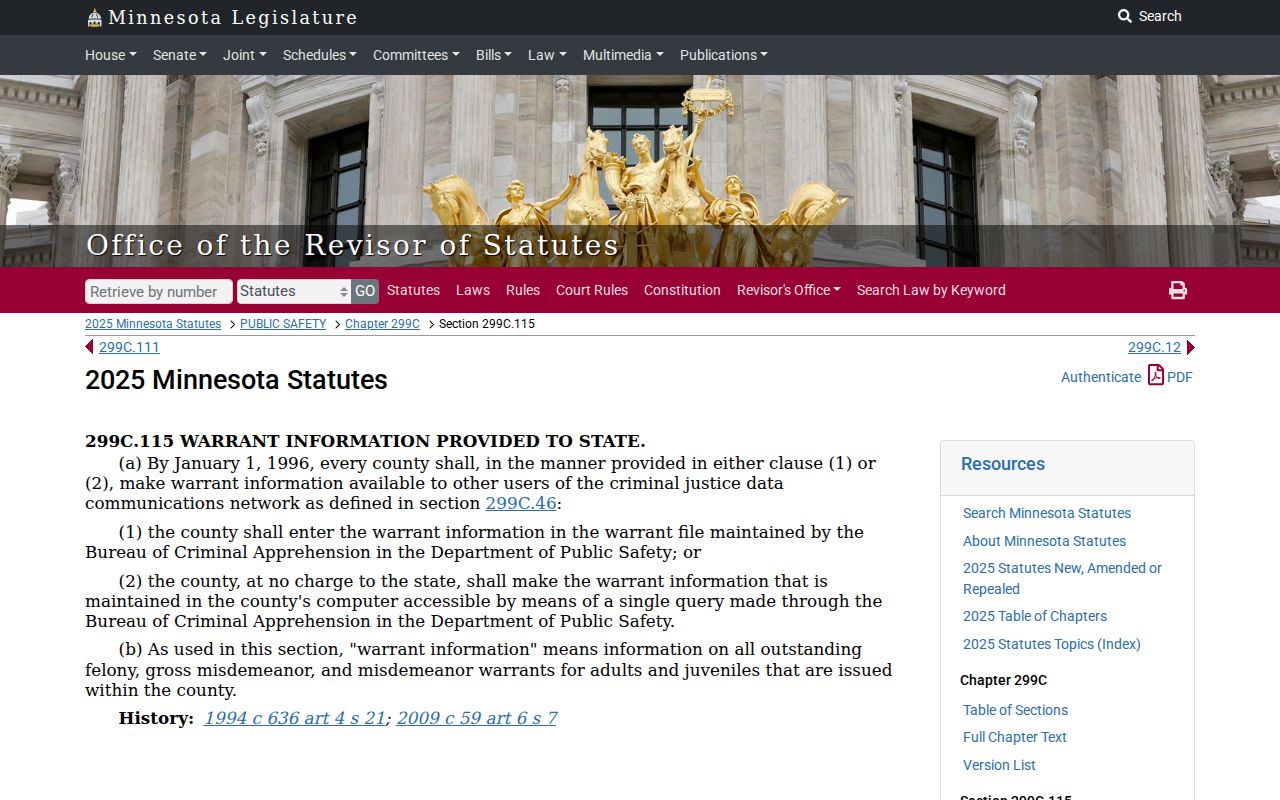
A closed public index is a legal category, not proof that Itasca County has no warrant records.
Most-Wanted Lists and Warrant Roundups
Itasca County has no most-wanted program, reward page, or published inclusion policy. No amnesty week or warrant roundup has been announced either. The sheriff's site does take tips, and that is the responsible way to pass along what you know about a wanted person.
Key Point: Official wanted lists belong to the agency that publishes them, and a hosted copy would go stale the day it was posted. The Sheriff's Office site is the place to check for any program the county announces.
The same rule applies to roundups: link the official notice, describe the program, and never republish names.
No Itasca County Warrant Amnesty Was Located
No amnesty week or reduced-fee surrender event appears in Itasca County's current official material. Waiting for one means waiting on something that may never come. The ordinary route works fine. Confirm the case, ask whether the warrant qualifies as a sign-and-release matter, and follow the court's instruction. What happens next varies. A new court date, a payment plan for a payable citation, a bail posting, or a motion handled by an attorney are all possible outcomes. Paying a fine settles the financial event, but it does not by itself recall a warrant that authorizes an arrest.
What Happens After an Itasca Warrant Is Served
Serving a warrant does not close the case. It usually opens the next stage of one in Itasca County. Once a person is taken into custody, the criminal rules require a prompt appearance before a judge. If court is not in session, officers can hold a defendant only as long as the rule allows, and the judge then decides the terms of release. Release might mean a simple promise to appear. It might mean bail, or conditions like no contact with a named person. Breaking those conditions can drag the case back to court with a new warrant attached. That is why the release order deserves a close read in Itasca County.
Note: A confirmed service entry in the case record matters more than a booking change, so ask Court Administration when the register of actions updates.
If Your Name Is on the List
Finding your own name changes the plan. Call Court Administration at 218-327-2870 first. Confirm the case number and ask the Itasca County court exactly what it needs from you before you act. A Minnesota attorney can then arrange a controlled appearance, a bond posting, or a motion to recall the warrant.
Important: Do not wait to be found. An open warrant can lead to arrest at a traffic stop, and an attorney can usually arrange a surrender on better terms.
Acting on an Itasca County warrant takes a few clear steps. The home page section on what to do if you have an Itasca County warrant lays them out. Bench warrants follow much the same recall path.